PROFESSIONAL ENGINEERING PLAYBOOK
Requirements that survive delivery, review and audit.
A 338-page playbook from safety-critical rail programmes in New South Wales.
Aligned to INCOSE SE Handbook v4 · ISO/IEC/IEEE 29148:2018 · ONRSR · TfNSW
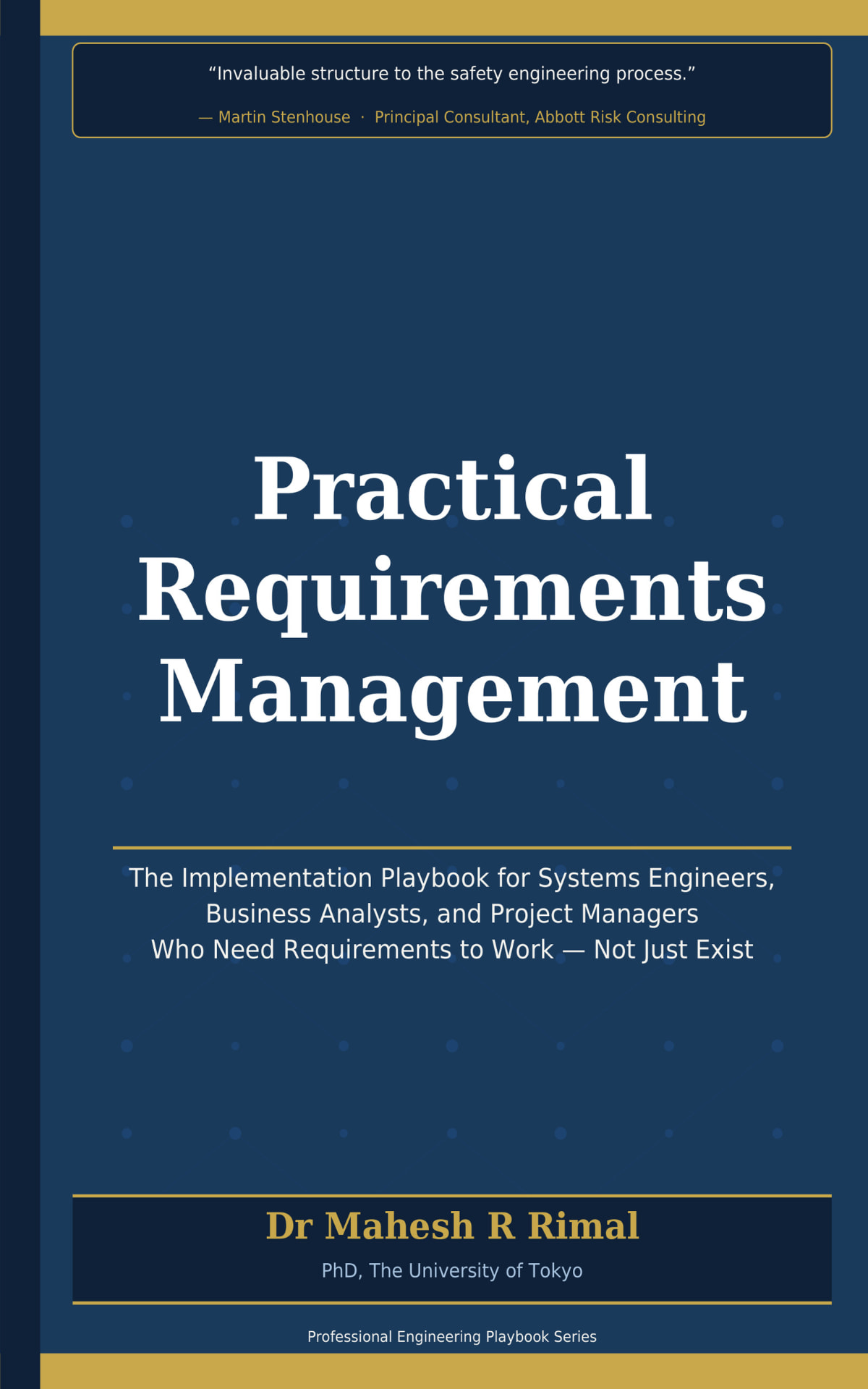
Available as Kindle eBook, paperback and hardcover.
Most requirements failures are set in the first workshop.
Missed interfaces, vague SHALL statements and baselines locked before stakeholders understood what they were signing off on. The book is the implementation guide written after two decades of seeing the same failures on rail programmes such as Sydney Metro, Western Sydney Airport and Canberra Light Rail.
What you will be able to do
Diagnose the four failure modes
Ambiguity, incompleteness, instability and untestability, before construction begins.
Elicit what stakeholders don't know they need
Six techniques ranked by effectiveness, plus a step-by-step workshop method.
Write to INCOSE and ISO 29148
Quality criteria applied to real requirements, with good-versus-bad rail signalling examples.
Baseline and control change
Baseline types, versioning, and change control that keeps traceability intact.
Verify and validate
Verification methods, acceptance criteria, and a worked verification matrix.
Govern IBM DOORS and DOORS Next
Authoring conventions and governance that survives an ONRSR audit.
Build traceability that stands up
Architectures and the RVTM used on NSW metro programmes.
Use AI and knowledge graphs responsibly
What works, what does not, and how to verify AI output.
INCOSE SE Handbook v4 · ISO/IEC/IEEE 29148:2018 · IBM DOORS / DOORS Next · ONRSR RSNL · TfNSW standards
The full syllabus. 17 chapters, 5 parts, 338 pages.
- 1Why Requirements Projects Fail — the four failure modes and the true cost of poor requirements
- 2The Modern Requirements Management Landscape — the four-quadrant map and the compliance landscape
- 3Characteristics of High-Quality Requirements — the six quality characteristics and the SHALL / SHOULD / MAY hierarchy
Every chapter opens with a specific outcome and closes with a three-point summary.
Thirty seconds on the argument of the book.
Book trailer — from one ambiguous requirement to the discipline that closes the gap.
Choose your format.
Digital
Kindle eBook
Instant download. Read on Kindle, phone, tablet or desktop.
Buy the eBook on AmazonUS$9.99
Other retailers — Kobo, Apple Books and morePaperback
6" × 9", 338 pages
Reference copy for the desk, the site office or the review room.
Buy the PaperbackUS$29.99
Hardcover edition (US) — US$34.99ISBN · eBook 978-1-7647231-2-1 · Paperback 978-1-7647231-0-7 · Hardcover 978-1-7647231-1-4
Free insights from the book.
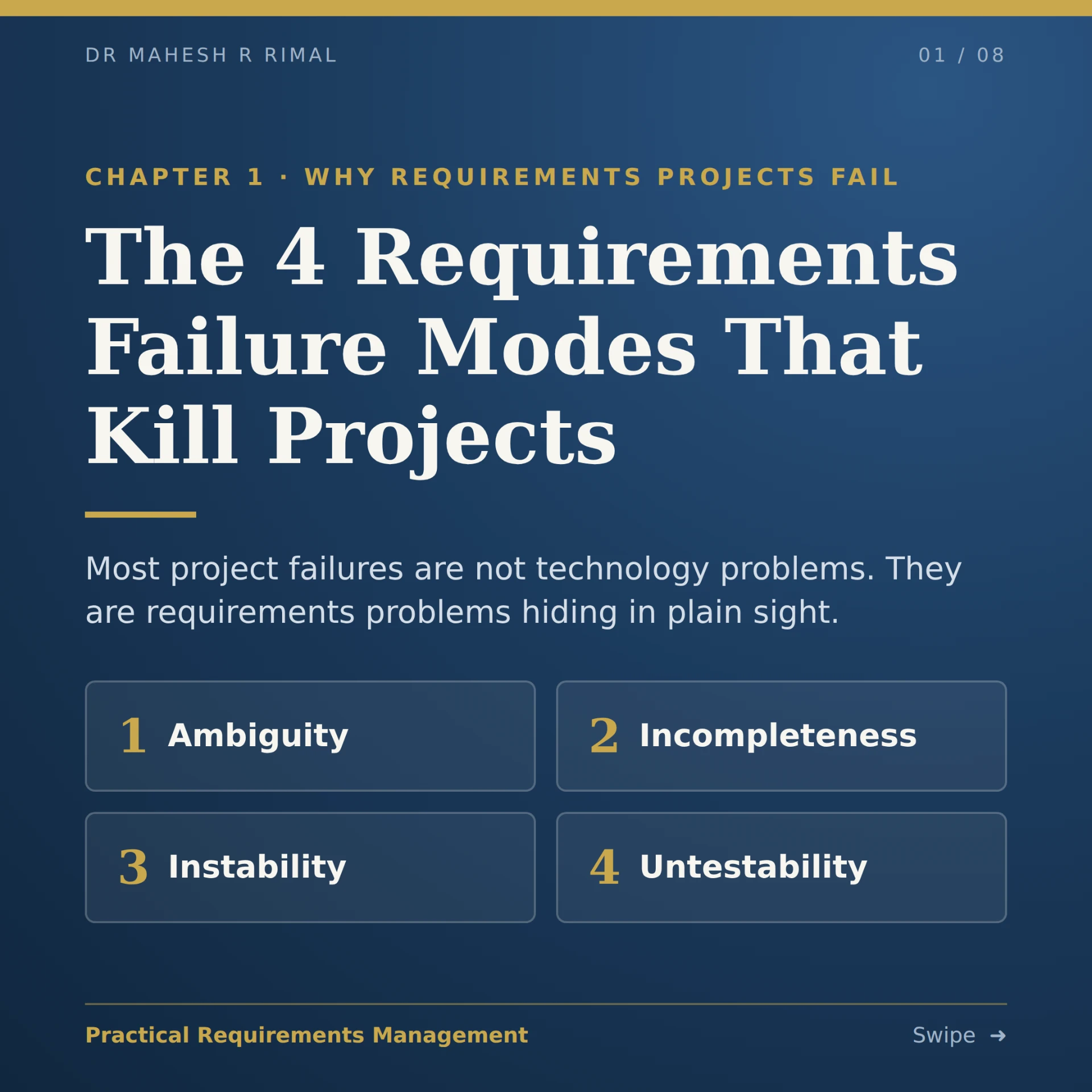
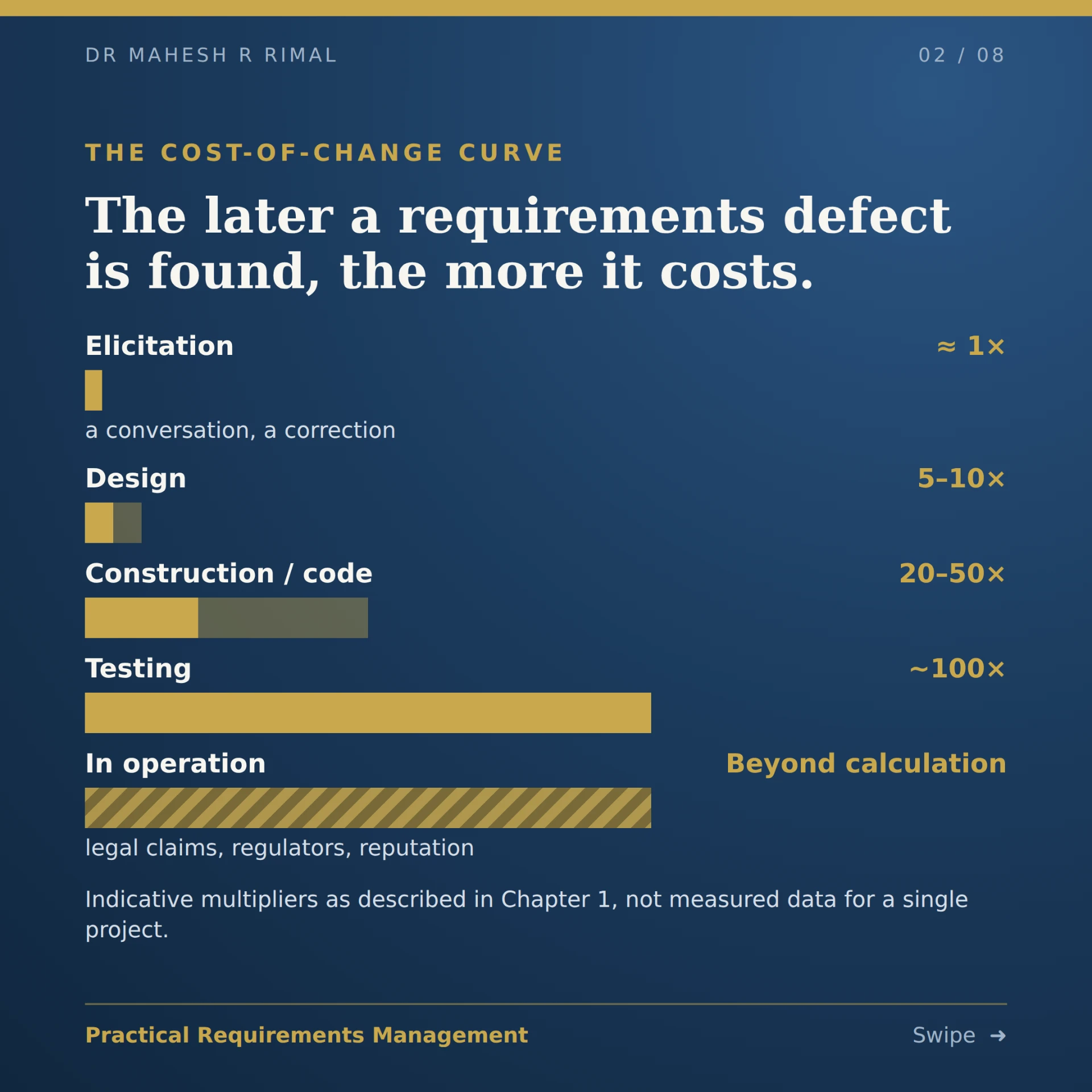
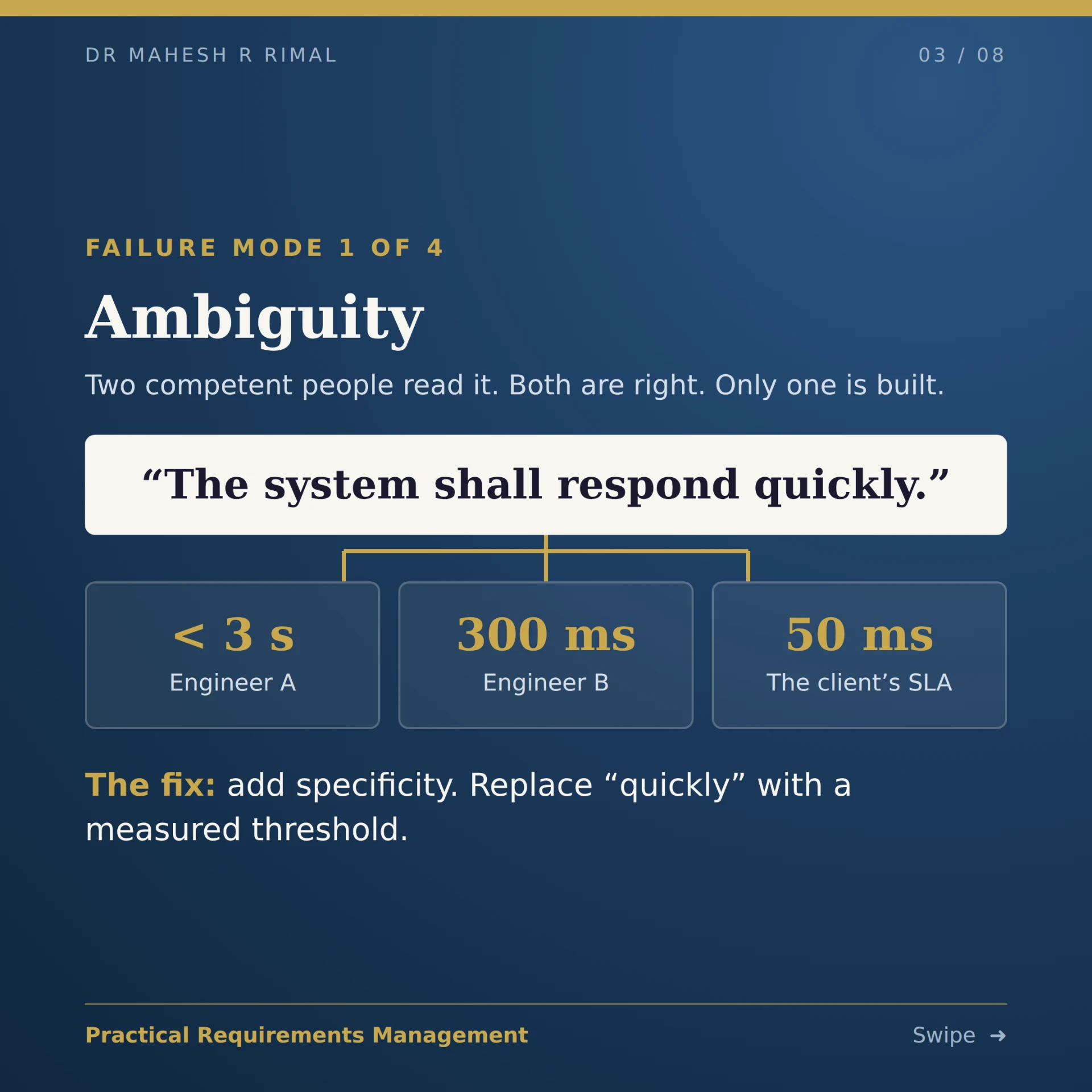
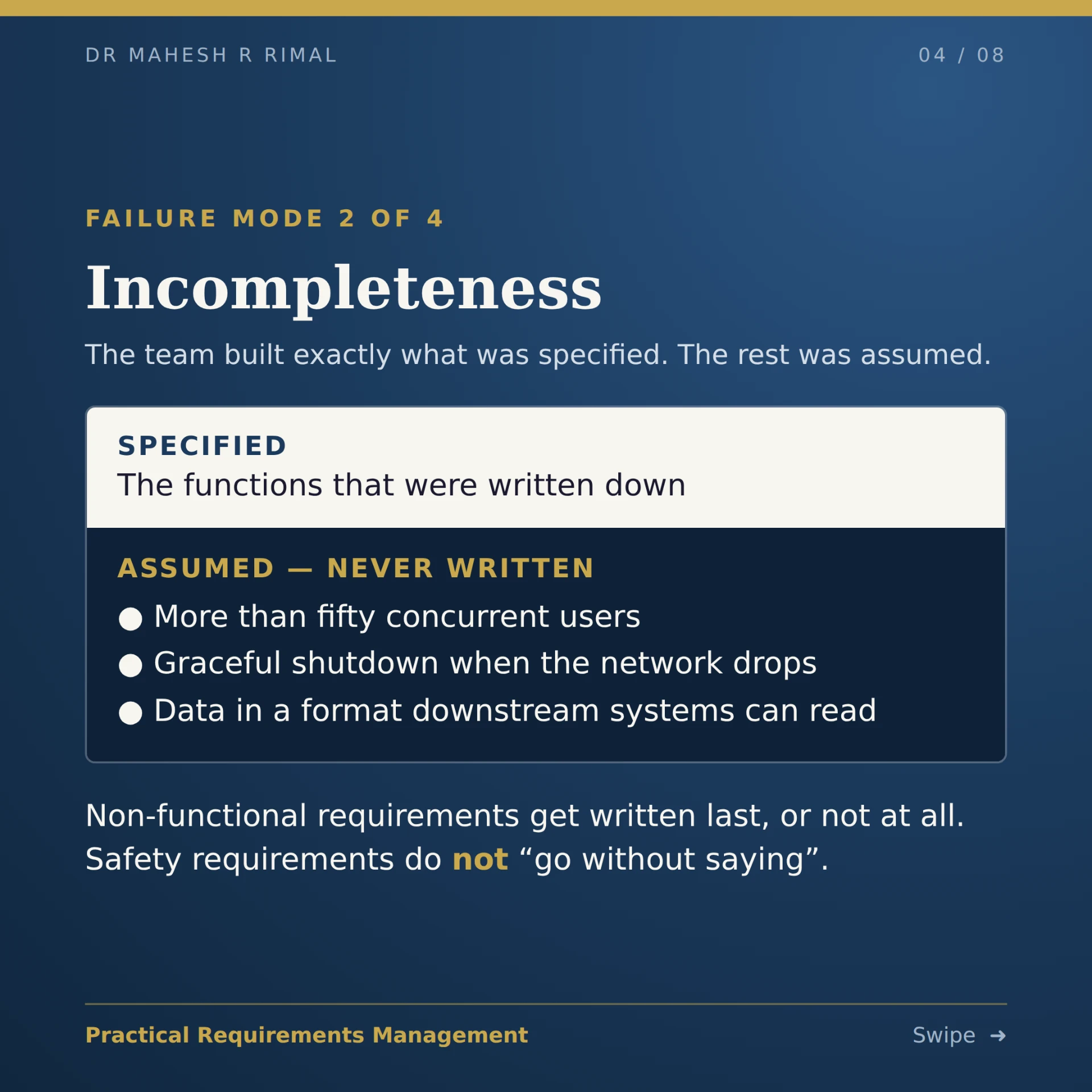
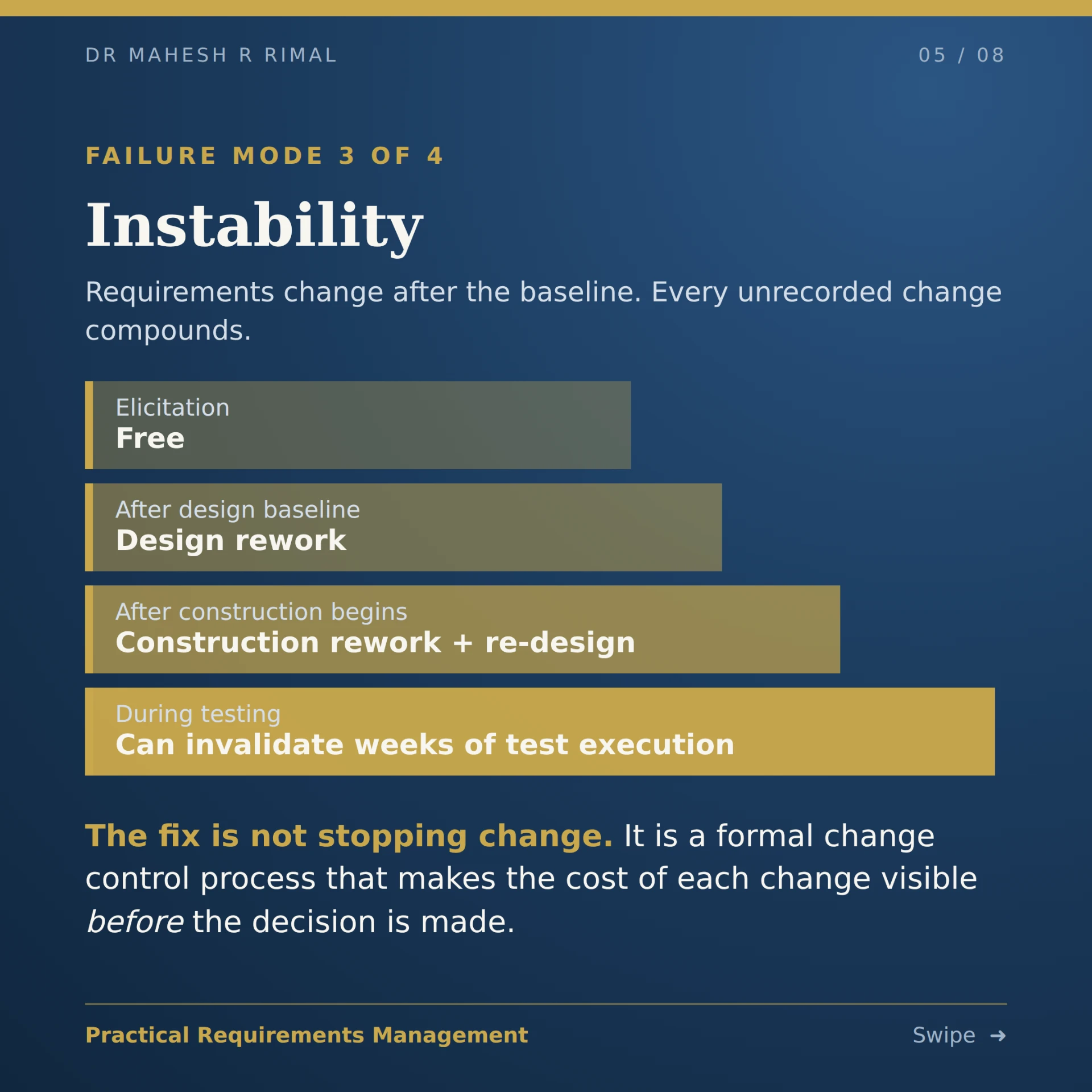
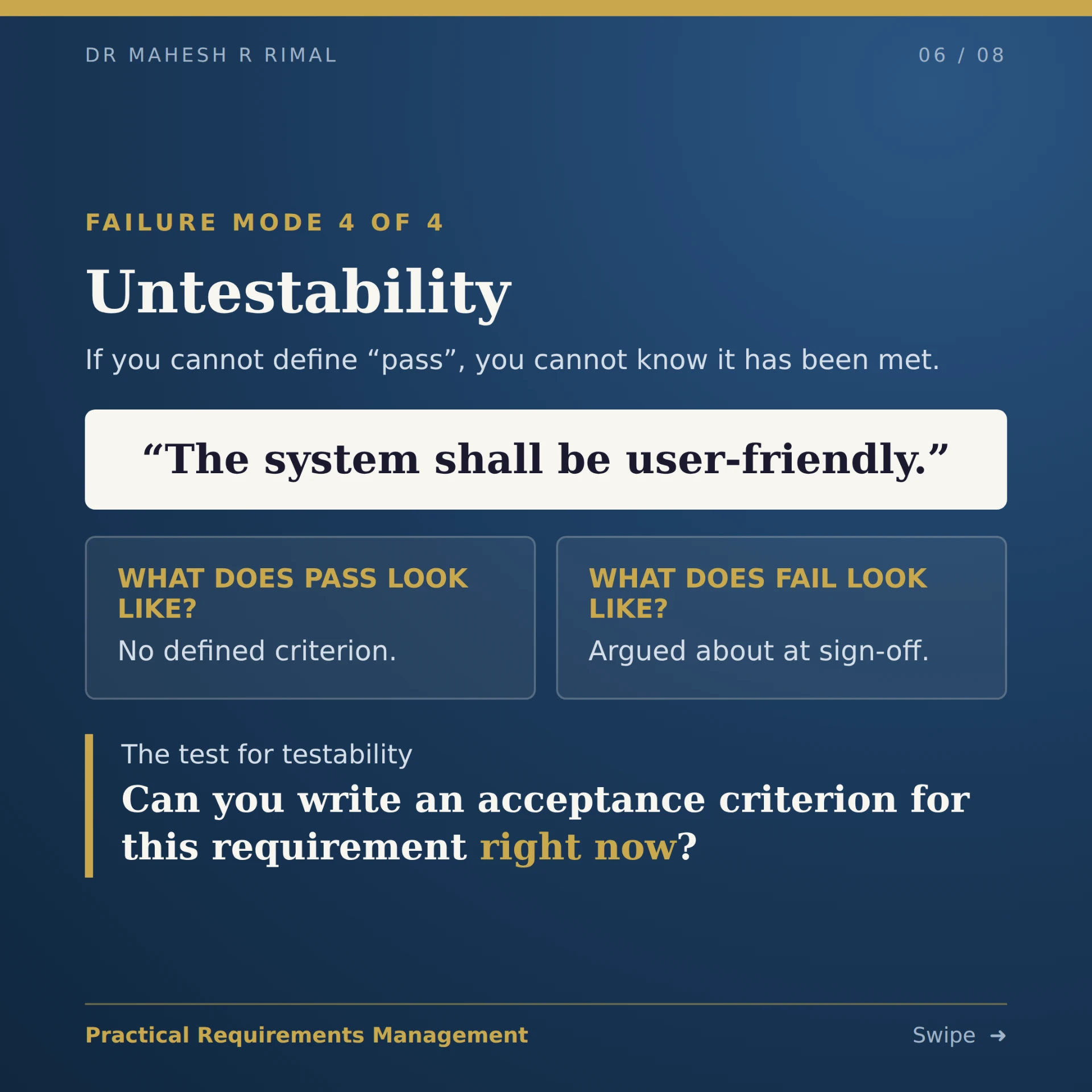
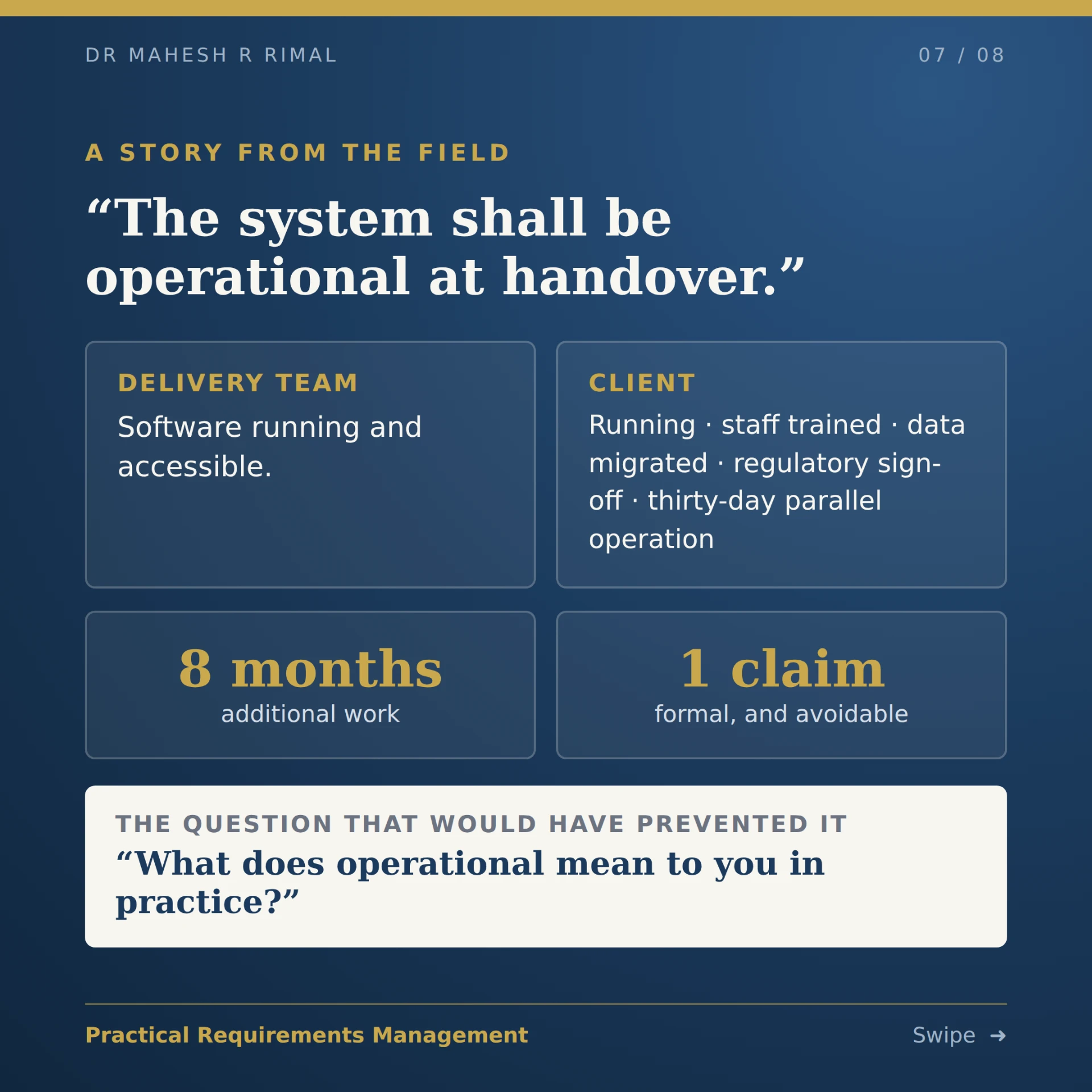
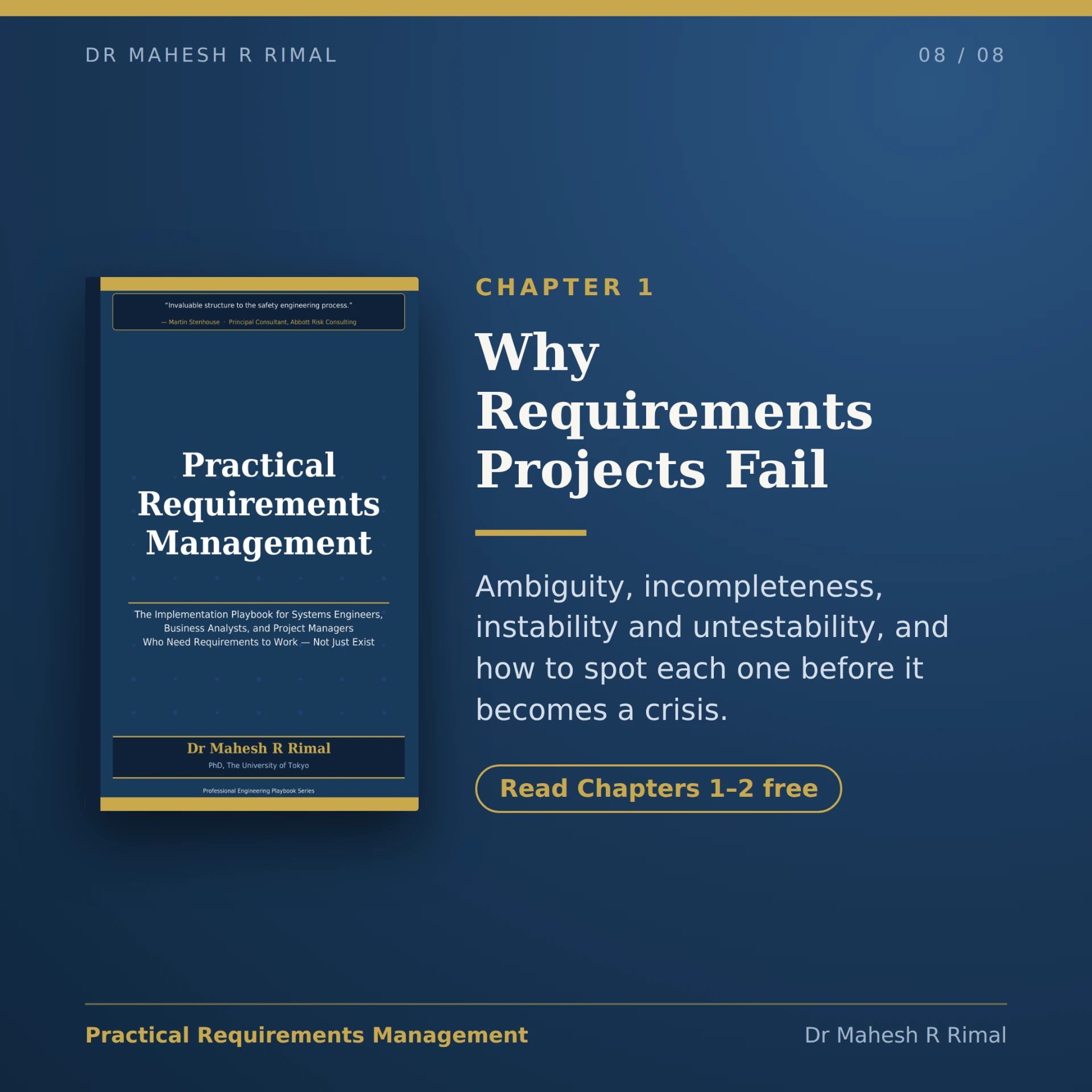
That was Chapter 1. Get both chapters free.
Companion tools for readers.
The book links to a resource hub with free checklists and templates, and two premium tools.
Free checklists and templates
Requirements Quality Checklist (25 INCOSE-aligned criteria), RVTM template, audit and review checklists.
 Visit the resource hub
SESA Requirements Quality Analyser
Score up to 5,000 requirements against the five INCOSE quality dimensions inside Excel.
Get it on GumroadAI Prompt Library
84 structured prompts for every stage of the requirements workflow.
Get it on Gumroad
Dr Mahesh R Rimal
PhD, The University of Tokyo · Systems engineering and safety assurance · Sydney, Australia
Dr Mahesh R Rimal is a systems engineering director and principal consultant with extensive experience in safety-critical rail infrastructure projects across New South Wales, including programmes operating under ONRSR and TfNSW frameworks. His specialisations include IBM DOORS and DOORS Next, Systems Engineering and Safety Assurance (SESA) governance, INCOSE-aligned requirements processes, and AI-assisted requirements engineering.
Endorsements
“His ability to develop structured roadmaps for project completion is exceptional.”
“Invaluable structure to the safety engineering process — robust safety outcomes every time.”
“All SESA requirements included in design and migrated to construction — project set for success.”
“A technically rigorous and practically grounded treatment of requirements engineering. Essential reading for practitioners who must deliver verifiable, traceable requirements in safety-critical environments.”
“His strong technical background ensures delivery teams understand their obligations under contract and specification requirements — and can track progress through every project phase.”
“Integrative, adaptable, and rigorous — an approach to SESA requirements management that was one of my best experiences integrating specialist derived requirements into the design process.”